


Did you know?
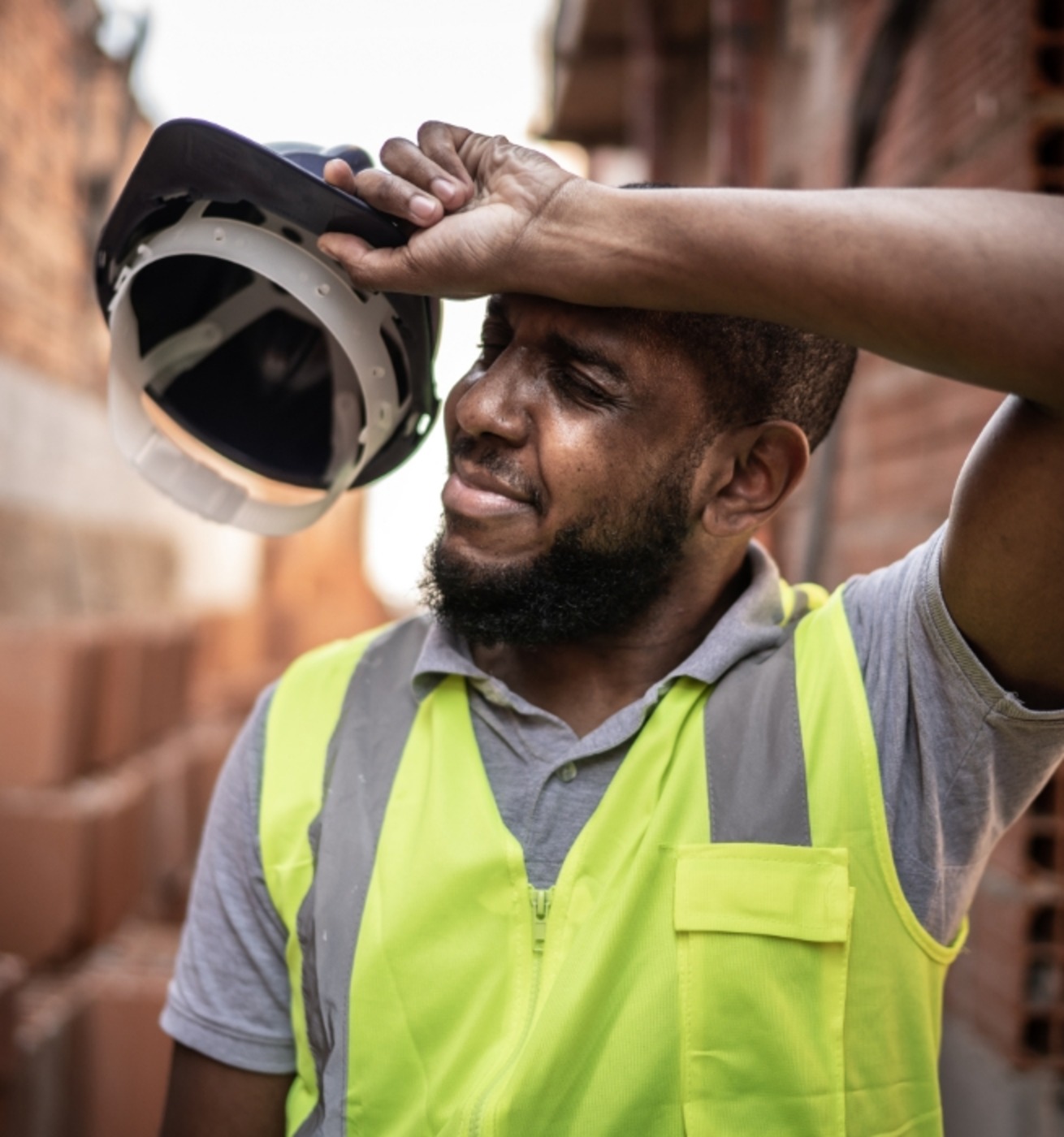
Heat stress is the buildup of heat in the body to the point where the body's thermostat has difficulty maintaining normal internal body temperature. Similarly, employees who are exposed to cold and cold environments could be at risk when the body cools too much.
Summary
Both working in heat and cold can have serious consequences. When the body is unable to cool itself through sweating, serious heat illnesses may occur. The most severe heat-induced illnesses are heat exhaustion and heat stroke. If actions are not taken to treat heat exhaustion, the illness could progress to heat stroke and possibly death.
Employees who work in or are exposed to cold and cold environments could be at risk of cold stress and related illnesses and injuries (hypothermia, frostbite, trench foot, chilblains, etc.). This hazard applies to cold environments that occur both naturally (e.g., outdoor weather conditions) as well as artificially created (e.g., refrigerated environments).
Employers must:
- Take every reasonable precaution to ensure the health and safety of persons at or near the workplace. [S.N.S. 1996, c. 7, s. 13(1)]
- Comply with the threshold limit values for exposure to physical agents, as listed in the latest version of the publication of the American Conference of Governmental Industrial Hygienists on Threshold Limit Values and Biological Exposure Indices (ACGIH TLVs and BEIs). [N.S. Reg. 52/2013, s. 2.3] Both heat stress and cold stress are physical agents.
Owners must: [S.N.S. 1996, c. 7, s. 19]
- Take every reasonable precaution to provide and maintain the owner’s premises being used as a workplace in a way that ensures the health and safety of persons at or near the workplace.
- Give to the employer at the workplace the information that is known (or could reasonably be expected to be known by the owner) and necessary to identify and eliminate or control hazards to the health or safety of persons at the workplace.
Heat Stress Guidelines
Signs and symptoms of health effects from heat stress are summarized in Table 1.
Table 1: Symptoms and Health Effects from Heat Stress Exposure
Symptoms |
Health Effects |
|---|---|
Heat Fatigue |
Signs include impaired performance of skills, mental concentration, or vigilance. Heat fatigue is generally due to the individual not being used to working in heat. There is no specific treatment except to move the person to a cooler environment before more serious conditions develop. |
Heat Rashes |
Most common issue. Prickly heat rash shows itself as red bumps normally where clothing is restrictive or chafes. As sweating increases, the bumps begin to feel prickly. Prickly heat rash occurs in skin that is persistently wet from unevaporated sweat. Rash may become infected if not careful. In most cases heat rash will disappear when the individual returns to a cooler environment. |
Heat Collapse |
In a collapse or faint, the brain does not receive enough oxygen because blood pools in the extremities. The individual may lose consciousness. The onset of collapse is rapid and unpredictable. Move to a cooler area, loosen clothing, and give fluids. |
Heat Cramps |
Heat cramps are sharp pains in the muscles that may occur alone or be combined with one of the other heat stress disorders. Usually caused by performing hard physical labour in a hot environment. Cramps are caused by a lack of water - note: excess salt could build up in the body if water lost through sweating is not replaced; do not use salt pills. Thirst cannot be relied on as a guide to the need for water. Water must be taken every 15 to 20 minutes in hot environments - avoid alcohol, coffee, tea, and carbonated drinks (pop). |
Heat Exhaustion |
Signs are headache, nausea, dizziness, blurred vision, weakness, giddiness, thirst. Skin is damp and looks muddy or flushed. Fortunately, this condition responds readily to prompt treatment. Symptoms of heat exhaustion are similar to heat stroke. People suffering from heat exhaustion should be removed from the hot environment, given fluids, loosen clothing, shower or sponge bath with cool water and rest in a cool place. |
Heat Stroke |
Heat stroke is a medical emergency. It occurs when the body's system of temperature regulation fails, and body temperatures rise to critical levels. This condition is caused by a combination of highly variable factors and is difficult to predict. Primary signs and symptoms of heat stroke are confusion, irrational behaviour, loss of consciousness, convulsions, hot dry skin, lack of sweating (usually), and an abnormally high body temperature. If body temperature is too high, it can cause death. The elevated metabolic temperatures caused by a combination of workload and environmental heat load are also highly variable and difficult to predict. Get medical attention immediately. |
Adapted from: OSHA Technical Manual, Section III: Chapter 4 Heat Stress - https://www.osha.gov/otm/section-3-health-hazards/chapter-4#heat_relatedillness |
|
Factors that Contribute to Heat Stress
Heat stress is often related to:
High temperature + high humidity + workload + clothing effects + physical conditions = heat stress
While heat stress is commonly associated with warm weather, it can occur any time the temperature is above normal (working in a boiler room for example). Some factors involved in causing heat stress are:
- employee (acclimatization, hydration, clothing, medical condition, physical condition (age, weight, fitness)),
- environment (air temperature, radiant heat, airflow), and
- work (load, pace, clothes).
It is difficult to predict who will be affected and when because individual susceptibility varies. Even at lower temperatures but with high humidity there is a risk of heat illnesses. It is important to recognize the symptoms of heat stress disorders and take immediate and appropriate steps. Pay particular attention to employees doing strenuous physical labour.
Threshold Limit Values
In Nova Scotia, working in hot conditions is governed by the Workplace Health and Safety Regulations. [N.S. Reg. 52/2013, s.2.3] The Wet Bulb Globe Temperature (WBGT) index adopted by the American Conference of Governmental Industrial Hygienists (ACGIH) is used. WBGT is influenced by air temperature, radiant heat, air movement, and humidity. Portable heat stress meters or monitors used to measure WBGT are commercially available.
Because WBGT is a value that represents the environment, when jobs require wearing impermeable clothing, such as chemical protective clothing, the WBGT does not include what the worker is experiencing inside the clothing. Therefore, monitored WBGT must be adjusted for the contribution of clothing for clothing as listed in Table 2.
In addition to clothing, a work demand assessment is also important when conducting an environmental assessment. As work demands increase, the employee’s metabolic rate and core body temperature increases. General guidance for selecting the work demand is summarized in Table 3 (below). Based on the work demand and the approximate proportion of work within an hour, the heat stress TLVs can be found in Table 4 (below).
Table 2: Clothing-Adjustment Factors
Clothing type |
Adjustment to WGBT (°C) |
|---|---|
Short Sleeves and Pants of Woven Material |
-1.0 |
Work Clothes (Baseline long sleeve shirt and pants) |
0.0 |
Cloth Coveralls (woven material) |
0.0 |
SMS Polypropylene Coveralls |
0.5 |
Polyolefin Coveralls |
1.0 |
Double Layer Cloth Clothing |
3.0 |
Limited-use Vapor-Barrier Coveralls |
11.0 |
Adding a Hood (Full Head and Neck Covering: not Face) |
1.0 |
Note: These values must not be used for completely encapsulating suits. Clothing adjustment factors cannot be added for multiple layers. The coveralls assume that only modesty clothing is worn underneath, not a second layer of clothing. There is no evidence to suggest that respirators or face coverings add to the heat stress burden. |
|
Table 3: Work Demand Categories with Examples
Category |
Examples |
Assigned Metabolic Rate [w] |
|---|---|---|
Rest |
Sitting |
115 |
Light |
Sitting with manual work with hands or hands and arms and driving. Standing, with some light arm work and occasional walking. |
180 |
Moderate |
Sustained moderate hand and arm work, moderate arm and leg work, moderate arm and trunk work, or light pushing and pulling. Normal walking. |
300 |
Heavy |
Intense arm and trunk work, carrying, shoveling, manual sawing; pushing and pulling heavy loads; and walking at a fast pace. |
415 |
Very Heavy |
Very intense activity at fast to maximum pace. |
520 |
Note: The effect of body weight on the estimated metabolic rate can be accounted for by multiplying the estimated rate by the ratio of actual body weight divided by 70 kg (154 lb). Source: International Organization for Standardization (ISO) 2017. Ergonomics of the thermal environment: Assessment of heat stress using the WBGT index. |
||
Table 4: Screening Criteria for TLV for Heat Stress Exposure
| Work Demand | Percentage of work in a cycle of work and recovery in an hour | |||
|---|---|---|---|---|
75 – 100% |
50 – 75% |
25 – 50% |
0 – 25% |
|
Light |
31.0°C |
31.0°C |
32.0°C |
32.5°C
|
Moderate |
28.0°C |
29.0°C |
30.0°C |
31.5°C |
Heavy |
- |
27.5°C |
29.0°C |
30.5°C |
Very Heavy |
- |
- |
28.0°C |
30.0°C |
Notes: 1. These TLVs are based on the assumption that nearly all acclimatized, fully clothed workers with adequate water and salt intake should be able to function effectively under the given working conditions without exceeding a deep body temperature of 38°C (100.4° F).
2. The TLVs are also based on the assumption that the WBGT of the resting place is the same or very close to that of the workplace. 3. Where the WBGT of the work area is different from that of the rest area, a time-weighted average should be used. 4. When the TLV for one work-rest regimen is reached, the workers should be assigned to another work/rest regimen of lower work percentage that has a higher TLV than the calculated WBGT. 5. The time base is taken as the proportion of work at the upper limit of the percent work range (e.g., 50% for the range of 25 – 50%). 6. WBGT values are expressed to the nearest 0.5°C.
|
||||
Be aware that the risk and severity of excessive heat strain may vary widely among people, even under identical heat stress conditions. If the measured time-weighted average WBGT adjusted for clothing exceeds the selected TLVs in Table 4, physiological monitoring must be conducted. A worker's state of heat stress can be monitored by measuring the core body temperature and their heart rate. The heat strain indicators listed below represent a guide for the time to stop an exposure and allow for recovery:
- Sustained (several minutes) heart rate is more than180 bpm (beats per minute) minus the individual’s age in years, for individuals with assessed normal cardiac performance; or
- Measured or estimated core temperature increases by more than 1°C from pre-job temperature if the pre-job temperature is less than 37.5°C; or
- Recovery heart rate at one minute after a peak work effort is greater than 120 bpm; or
- There are symptoms of sudden and severe fatigue, nausea, dizziness, or lightheadedness.
Further information on physiological monitoring can be found in the 1986 National Institute for Occupational Safety and Health (NIOSH) document Criteria for a Recommended Standard: Occupational Exposure to Hot Environments available on the NIOSH website: http://www.cdc.gov/niosh/docs/86-113/
Criteria for working in heat related conditions are a difficult item to measure and require specialized equipment. It is recommended that factors related to heat stress be measured professionally. For more questions about heat stress assessment and analysis, the OHS Division’s occupational hygienists can be reached at 1-800-9LABOUR (952-2687).
An employee should:
- If you believe you or another person may be subject to heat stress at your workplace, get first aid immediately and notify your supervisor.
- If the supervisor does not respond to your concern to your satisfaction, you should raise the issue with the Joint Occupational Health and Safety Committee or Representative. If this still does not satisfy your concern, you may contact the OHS Division at 1-800-9LABOUR or LAESafetyBranch@novascotia.ca. You have a right to refuse to work in those conditions if you believe there is a risk to your health or safety due to heat stress.
Preventing Heat Stress
The employer must:
- Develop a heat stress strategy when an employee may be exposed to environmental conditions that could cause adverse health effects due to heat stress. The main components of a heat stress strategy are:
- Employee training and education, including signs and symptoms of heat stress and what to do if there is a concern
- Heat stress assessment
- Heat stress controls
A heat stress assessment must contain an initial environmental assessment, WBGT monitoring, clothing factors adjustment, and work demand analysis. If the adjusted WBGT is higher than the screening TLV, then physiological monitoring needs to be performed to determine if an employee is suffering from heat strain.
Heat stress controls include:
- Elimination or substitution of another process that removes the risk of exposing a worker to a heat stress environment;
- Worker acclimatization;
- Engineering controls (air conditioning, mechanical ventilation/fan, shaded work area, control the heat at source, etc.);
- Administrative controls (reassign the work-rest regimen, cool drinking water, schedule jobs to cooler time of the day, etc.); and
- Protective clothing (water or ice-cooled insulated clothing, light summer clothing, light colored clothing, head covering, etc.).
If it is not possible to eliminate the heat sources or substitute another process, engineering controls are the most effective means of reducing conditions that could cause heat stress. Appropriate controls to be used at a workplace must be based on the results of a heat stress assessment. Examples of some heat stress controls are listed in Table 5.
Table 5: Examples of Heat Stress Controls
Controlling the heat stress |
Guard against heat illness |
|---|---|
Work in ventilated areas. All workplaces should have good general ventilation as well as spot cooling in hot work areas. |
Drink cool water in small amounts frequently, one cup every 20 minutes - even when you are not feeling thirsty. Avoid alcohol, coffee, tea and caffeinated soft drinks which cause dehydration. Avoid eating heavy meals before working in the heat. |
Do not use fans when the thermometer reads 35°C as the air movement may increase the heat load. |
Make water supply easily accessible, place closer to work area. |
Take regular rest breaks and increase frequency in times of higher temperature and humidity. Short, frequent work-rest cycles are best. |
Ask how employees are feeling. Supervisors should monitor workplace temperature and humidity and check employees' condition. Allow employees to stop their work if they become extremely uncomfortable. |
During breaks rest in an air-conditioned area if possible, or at least in shaded areas. |
Employees and employers should learn to spot signs of heat stroke. Get emergency medical attention if someone has one or more of these symptoms: mental confusion or loss of consciousness, flushed face, hot dry skin or has stopped sweating. |
Turn off heat generating equipment that is not being used. |
Train first-aid employees to recognize and treat signs of heat stress; be sure all employees know who is trained to give first aid. |
Schedule more physically demanding tasks in the cooler times of the day. |
Reduce work for anyone at risk. Employers should determine fitness for work in hot environments. Some factors to consider are age, poor physical conditioning, pregnancy, previous heat injuries, certain medical conditions, and lack of acclimatization. |
Rotate people through hot, heavy-demand jobs, if possible. |
Check with your doctor for medical conditions - heart conditions and diabetes can increase the risk of injury from heat exposure. |
Humidex
The Occupational Health Clinics for Ontario Workers (OHCOW) has prepared a heat stress tool kit, which includes a humidex-based heat stress calculator and a humidex-based heat response plan. Note that some simplifications and assumptions have been made, therefore, the plan may not be applicable in workplaces with additional sources of heat and/or humidity. This plan assumes moderate, unacclimatized work. The tool provides three methods of calculation based on the information you have available. Based on the results, the tool then provides a response plan with control methods to protect workers, which can be downloaded and printed for sharing in the workplace.
Office Temperatures
Recommendations provided by CSA Z412-17 Office Ergonomics – An application standard for workplace ergonomics include:
- Summer conditions: optimum temperature of 24.5°C with an acceptable range of 23-26°C
- Winter conditions: optimum temperature of 22°C with an acceptable range of 20-23.5°C
NOTE: CSA indicates both of these conditions are based on Table 3 from ASHRAE Standard 55, at 50% relative humidity and average air speed of <0.15 m/s.
The American Society of Heating, Refrigerating, and Air Conditioning Engineers (ASHRAE) Standard 55 - 2013 Thermal Environmental Conditions for Human Occupancy offers that these recommended temperature ranges have been found to meet the needs of at least 80% of individuals. Some people may feel uncomfortable even if these values are met. Additional measures may be required. In some situations, legislation may have specific requirements.
Cold Stress Guidelines
Cold is a physical hazard and cold stress can impact workers who are not adequately protected against cold conditions. When the human body is unable to sufficiently warm itself, cold-related illnesses and injuries can occur that could lead to tissue damage and potentially death.
Environmental factors that influence the severity of cold stress and the perception of cold include air temperature, wind speed, and humidity. Personal factors include physical activity, work/rest timing, protective clothing, age, gender, medical conditions, etc.
The normal core temperature of the human body is 37ºC. The body maintains this by preventing heat loss and increasing heat production. In cold environments, the blood vessels in the skin and extremities constrict to minimize the cooling of the blood and to keep the core/internal organs warm. Continued exposure can lead to the following injuries or illnesses:
Table 6: Cold Stress Illnesses and Symptoms
Hypothermia: When the human body is exposed to cold temperatures, it will eventually begin to lose heat more quickly than it can produce it and lead to a depletion of the body’s stored energy resulting in an abnormally low body temperature (hypothermia). When the body temperature is too low, it affects the brain, and can prevent self-rescue from the cold environment and possible death. Hypothermia is defined as a core body temperature below 35ºC. |
Early Stage
Late Stage
|
Frostbite: Frostbite results from tissue freezing (temperature decreases below 0ºC). It causes a loss of sensation and colour in the impacted areas. Areas most impacted are the nose, cheeks, chin, fingers, and toes. It can cause permanent tissue damage and in extreme cases, may require amputation of the affected tissue. |
|
Trench Foot: Trench foot (or immersion foot) results when the feet are exposed to wet and cold conditions for an extended period. If feet remain wet, it can occur at temperatures as high as 16ºC as feet that are wet lose heat 25 times faster than those that are dry. The body reduces blood circulation in the feet to prevent heat loss, resulting in tissue death due to lack of oxygen and nutrients and buildup of toxic products. |
|
Chilblains: Repeated exposure of skin to temperatures that are just above freezing up to (0 to 16ºC) can cause chilblains. Repeated cold exposure can cause permanent damage to the small blood vessels (capillaries) in the skin causing redness and itching that will return with subsequent exposures. Chilblain typically occurs on the cheeks, ears, fingers and toes. |
|
Source: Adapted from NIOSH: Cold Stress – Cold related illnesses (no date). https://www.cdc.gov/niosh/topics/coldstress/coldrelatedillnesses.html |
|
Figure 1: Types of Cold Injuries
Adapted from ACGIH TLVs and BEIs, Original source: US Department of the Army: Prevention and Management of Cold-Weather Injuries

Hyperthermia Prevention
Hyperthermia is defined in Table 6. The physiological changes that occur as the temperature goes below this value are presented in Table 7. In an occupational setting, employees should be protected from cold exposure so that the deep core temperature does not fall below 36°C (96.8°F). Lower body temperatures can result in reduced mental alertness and reduction in rational decision making. As the core body temperature goes below 33°C (91.4°F), employees can become severely debilitated.
Table 7: Core Temperature and Associated Physiological Changes that Occur as Core Temperature Falls. Individuals Respond Differently at Each Level of Core Temperature
Stage |
Core |
Physiological Changes |
|---|---|---|
Normothermia |
(37.0) (98.6) |
|
Mild Hypothermia |
(35.0) (95.0) |
Maximal shivering; increased blood pressure |
(34.0) (93.2) |
Amnesia; dysarthria; poor judgment; behavior change |
|
(33.0) (91.4) |
Apathy; ataxia (lack of muscle control or coordination of voluntary movements) |
|
Moderate Hypothermia |
(32.0) (89.6) |
Stupor |
(31.0) (87.8) |
Shivering ceases; pupils dilate |
|
(30.0) (86.0) |
Cardiac arrhythmias; decreased cardiac output |
|
(29.0) (84.2) |
Unconsciousness |
|
Severe Hypothermia |
(28.0) (82.4) |
Hypoventilation; ventricular fibrillation (heart beats out of rhythm) likely; |
(27.0) (80.6) |
Loss of reflexes and voluntary motion |
|
(26.0) (78.8) |
Acid-base disturbances; no response to pain |
|
(25.0) (77.0) |
Reduced cerebral blood flow |
|
(24.0) (75.2) |
Hypotension; bradycardia; pulmonary edema |
|
(23.0) (73.4) |
No corneal reflexes; areflexia |
|
(19.0) (66.2) |
Electroencephalographic silence |
|
(18.0) (64.4) |
Asystole (cardiac arrest) |
|
(15.2) (59.2) |
Lowest infant survival from accidental hypothermia |
|
(13.7) (56.7) |
Lowest adult survival from accidental hypothermia |
|
Source: adapted from ACGIH TLVs and BEIs |
||
Hyperthermia is a life-threatening condition and must be treated promptly. Supervisors and employees should be aware of the early symptoms so that preventative measures can be taken. Exposure to cold should be stopped immediately for any employee when severe shivering becomes evident.
Cold, wet, and windy weather pose the greatest risk for developing hypothermia. Whole-body protection must be provided.
Cold-water immersion can cause life-threatening hypothermia in a matter of hours if proper protection is not worn. Table 8 presents the amount of time that an average person can be immersed based on the water temperature and depth.
Risk factors for hypothermia include inactivity, energy depletion, endocrine disorders, age, burns and skin disorders, trauma, neuropathies, and drug or alcohol use.
Table 8: Cold-Water Immersion Time Limits (Hours) for Reaching a Core Temperature of 35.5°C at Different Water Temperatures and Immersion Depths. For Immersion Times Greater than 6 Hours, the Risk of Non-Freezing Cold Injury Substantially Increases
Water Temperature (°C) (°F) |
Knee-Deep |
Waist-Deep (Hours) |
Chest-Deep |
|---|---|---|---|
(10-12) (50-54) |
12.8 |
1.9 |
1.3 |
(13-15) (55-59) |
15.6 |
7.5 |
2.2 |
(16-18) (60-64) |
22.2 |
10.2 |
7.9 |
(18-21) (65-69) |
33 |
13.8 |
10.5 |
Source: adapted from ACGIH TLVs and BEIs. Original source: Department of the Army: Prevention and Management of Cold- Weather Injuries. |
|||
Frostbite Prevention
Frostbite occurs when tissue temperature decreases below 0°C (32°F). Frostbite is most common in exposed skin (nose, ears, cheeks, exposed wrists), but also occurs in the hands and feet. Wet skin cools faster.
Instantaneous frostbite can occur when the skin comes in contact with supercooled liquids, such as petroleum products, oil, fuel, antifreeze, and alcohol, all of which remain liquid at temperatures of -40°C (-40°F). Contact frostbite can occur by touching cold objects with bare skin (particularly highly conductive metal or stone), which causes rapid heat loss. To prevent contact frostbite, employees should wear anti-contact gloves.
Risk factors for frostbite include temperature, wetness, wind chill, constrictive clothing, race, sex, hypoxia, Raynaud’s syndromes, and vasoconstrictor drugs. Raynaud’s disease is a peripheral vascular disorder more prevalent in women than men.
ACGIH uses the Wind Chill Temperature (WCT) Index for defining temperature criteria. The WCT Index integrates temperature and wind speed to provide an estimate of the overall cooling power of a cold environment. The WCT standardizes the cooling power of the environment to an equivalent air temperature for calm conditions. WCTs are specific in their correct application, only estimating the danger of cooling for the exposed skin of persons walking at 3 mph. Wind does not cause an exposed object to become cooler than the ambient temperature, but instead wind causes exposed objects to cool toward the ambient temperature more rapidly than without wind. Wind speeds heard from weather reports do not take into account work-generated wind, such as running or riding on an open vehicle.
The WCT presents the relative risk of frostbite and the predicted times to freezing (Tables 9 and 10) of exposed facial skin. Facial skin was chosen because this area of the body is typically not protected. Frostbite cannot occur if the air temperature is above 0°C (32°F).
Wet skin exposed to the wind will cool faster. If the skin is wet and exposed to wind, the ambient temperature used in the WCT table should be 1°C (50°F) lower than the actual ambient temperature. When cold surfaces are below -7°C (19.4°F), a warning should be given to each employee by the supervisor to prevent inadvertent contact with bare skin. If the air temperature is -17.°C (°F) or less, hands should be protected by mittens. Machine controls and tools for use in cold conditions should be designed so that they can be handled without removing the mittens.
Table 9: Wind Chill Temperature Index. Frostbite Times are for Exposed Facial Skin

Table 10: Time in Minutes Until the Occurrence of Cheek Frostbite in the Most Susceptible 5% of Military Personnel

Manual dexterity is important in occupational settings. Manual dexterity is the ability to make coordinated hand and finger movements to grasp and manipulate objects. Special protection (as follows) is required to prevent injuries to the hands:
- When fine work is required with bare hands (for more than 10-20 minutes at a time) in a setting that is less than 16ºC, controls should be implemented to keep hands warm. Methods may include warm air jets, radiant heaters, and warming plates.
Additionally, all metal handles and tools should be covered in insulating material at temperatures below -1ºC (30.2ºF). - If fine manual dexterity is not required, gloves should be worn if the temperature falls below 16ºC (sedentary work), 4ºC (light work), or -7 ºC (moderate work)
Acute Cold-Water Exposure
Sudden immersion into cold water causes a cold shock response. The body responds by gasping, hyperventilating, narrowing of blood vessels in hands and feet, and increasing the heart rate and blood pressure. Generally, the core temperature falls to 35 ºC in about 1 hour in 5 ºC water, in 2 hours in 10ºC water, and in 3-6 hours in 15ºC water. The progression from cold shock to hypothermia can be summed up in the “1-10-1” rule. This rule states that the cold shock response with increased water aspiration occurs in the first minute; in 10 minutes the muscle temperatures decline to the point that muscle function is severely impaired, and in 1 hour, the core temperature begins to fall to levels that are dangerous.
Cold-Weather Clothing
Cold-weather clothing reduces heat loss and protects against hypothermia and peripheral cold injuries. Using a standard set of clothing for an entire group could result in overheating and sweating during work in some, while others would not be kept warm enough. Employees should be able to adjust clothing according to their own needs.
If exposed areas of the body cannot be protected sufficiently to prevent the sensation of excessive cold or frostbite, protective items should also include wearable heating devices (such as a heated vest or toe warmers). Feet are susceptible to peripheral cold injuries. All employees should be provided with appropriately rated footwear for the conditions they are working in.
If the available clothing does not prevent hypothermia or frostbite, the work itself should be modified or suspended until adequate clothing is made available or until weather conditions improve.
Work-Warming Regimen
When work is continuously performed in an environment with a WCT of less than -7 ºC, heated warming shelters should be available nearby. Employees should be encouraged to use these shelters at regular intervals with the frequency depending on the severity of the environmental exposure. Hot beverages and soups should be provided at the work site as they provide calories and increase morale.
For work at or below a WCT of -12ºC, the following additional steps should be implemented:
- Using a buddy system: All employees should be constantly supervised while working in the cold.
- Adjusting the work rate to avoid heavy sweating that would result in wet clothing. If heavy workloads are required, rest periods (in heated shelters) should be taken as well as the opportunity to change into dry clothing.
- Providing new employees with time needed to adjust to working conditions and the required protective clothing. They should not be required to work full-time hours in a cold environment in the initial days of their employment.
- Adjusting for the weight and bulkiness of clothing when estimating work performance and required weights to be lifted by employees.
- Avoiding excessive periods of sitting still or standing still, metal chairs, and drafts, as much as possible.
- Providing employees with training which includes instruction in, at a minimum:
- re-warming procedures and first-aid treatment
- clothing practices
- eating and drinking habits
- recognition of frostbite
- recognition of signs and symptoms of impending hypothermia or excessive cooling of the body even when the shivering does not occur
- safe work practices
Cold Risk Management Strategy
Fatal exposures to cold among employees have almost always resulted from not being able to leave low environmental air temperatures or from immersion in low-temperature water.
Figure 2 presents a risk management strategy to use in cold environments that assesses and mitigates cold hazards.
Figure 2: Risk Management Process for Evaluating Cold Stress

An employee should:
- If you believe you or another person may be subject to a cold stress-related illness or injury at your workplace (particularly hypothermia or frostbite), get first aid immediately and notify your supervisor.
- If the supervisor does not respond to your concern to your satisfaction, you should raise the issue with the Joint Occupational Health and Safety Committee or Representative. If this still does not satisfy your concern, you may contact the OHS Division at 1-800-9LABOUR or LAESafetyBranch@novascotia.ca. You have a right to refuse to work in those conditions if you believe there is a risk to your health or safety due to cold stress.
Legislation
OCCUPATIONAL HEALTH AND SAFETY ACT
S.N.S. 1996, c. 7
Section 13 DUTIES AND PRECAUTIONS
13. (1) Every employer shall take every precaution that is reasonable in the circumstances to
(a) ensure the health and safety of persons at or near the workplace;
(b) provide and maintain equipment, machines, materials or things that are properly equipped with safety devices;
(c) provide such information, instruction, training, supervision and facilities as are necessary to the health or safety of the employees;
(d) ensure that the employees, and particularly the supervisors and foremen, are made familiar with any health or safety hazards that may be met by them at the workplace;
(e) ensure that the employees are made familiar with the proper use of all devices, equipment and clothing required for their protection; and
(f) conduct the employer's undertaking so that employees are not exposed to health or safety hazards as a result of the undertaking.
(2) Every employer shall
(a) consult and co-operate with the joint occupational health and safety committee, where such a committee has been established at the workplace, or the health and safety representative, where one has been selected at the workplace;
(b) co-operate with any person performing a duty imposed or exercising a power conferred by this Act or the regulations;
(c) provide such additional training of committee members or the representative as may be prescribed by the regulations;
(d) comply with this Act and the regulations and ensure that employees at the workplace comply with this Act and the regulations; and
(e) where an occupational health and safety policy or occupational health and safety program is required pursuant to this Act or the regulations, establish the policy or program.
(3) The employer at a subsea coal mine shall provide such additional resources or information for the committee as may be prescribed by the regulations.
(4) Every employer shall, in accordance with the regulations, establish and implement a policy respecting the prevention of harassment in the workplace.
[N.S. 2007, c. 14, s. 7; 2010, c. 66, s. 5; 2024, c. 10, s. 13]
Section 19
19. Every owner shall
(a) take every precaution that is reasonable in the circumstances to provide and maintain the owner's land or premises being or to be used as a workplace
(i) in a manner that ensures the health and safety of persons at or near the workplace, and
(ii) in compliance with this Act and the regulations; and
(b) give to the employer at the workplace the information that is
(i) known to the owner or that the owner could reasonably be expected to know, and
(ii) necessary to identify and eliminate or control hazards to the health or safety of persons at the workplace.
Workplace Health and Safety Regulations
N.S. Reg. 52/2013
Part 2 OCCUPATIONAL HEALTH
Section 2.3 Threshold limit values
2.3 An employer must comply with, and ensure compliance with, the threshold limit values for exposure to all of the following, as listed in the TLVs and BEIs:
(a) gases;
(b) vapours;
(c) mists;
(d) fumes;
(e) smoke;
(f) dust;
(g) chemical substances;
(h) physical agents.