


Did you know?
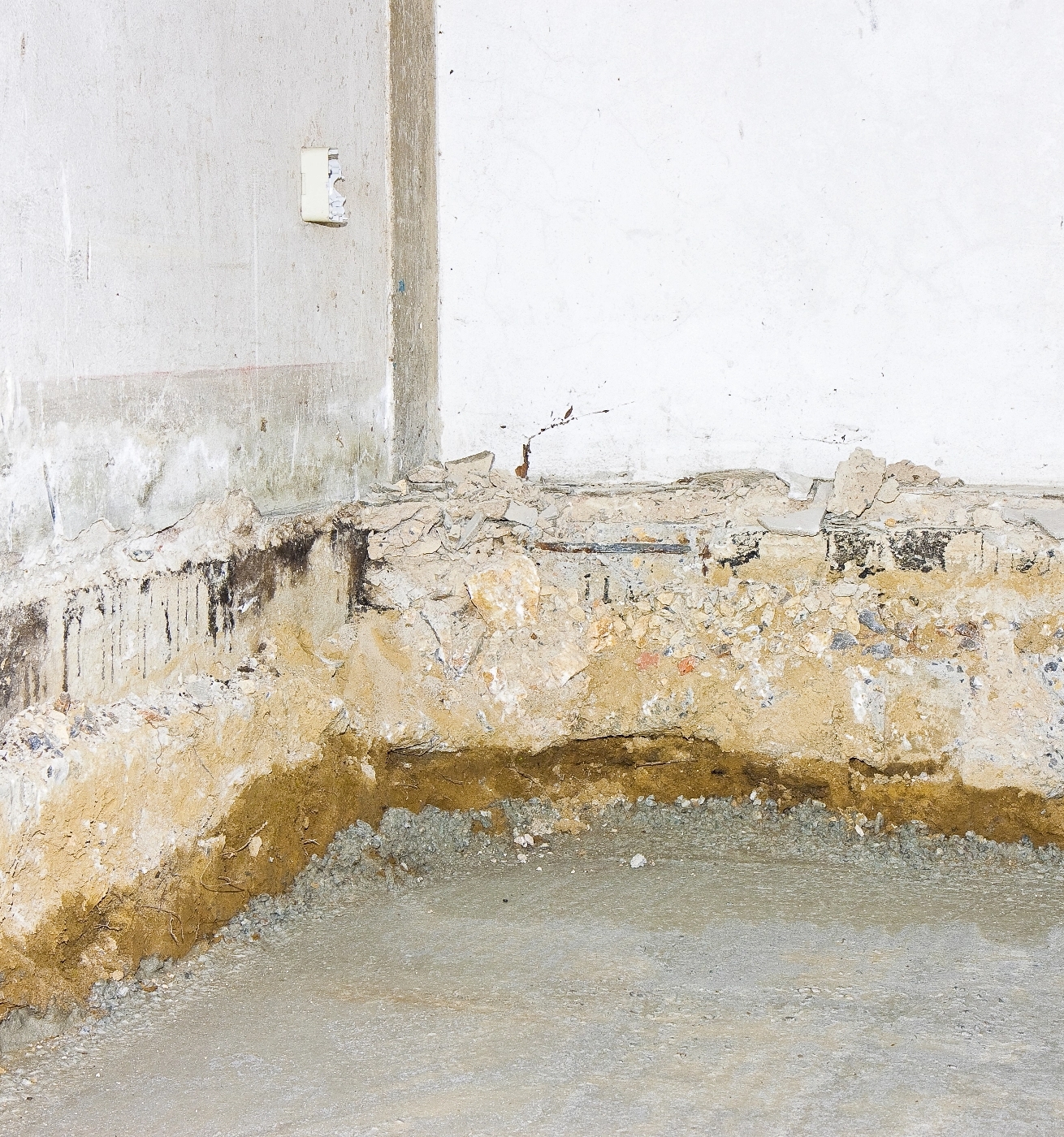
Radon in the soil – radon can enter a building if the soil is not properly sealed off?
Detecting radon – radon has to be measured with special equipment because it cannot be detected through human senses?
Remediating radon – radon can cause lung cancer over time, but the risk is reduced when the indoor concentration is controlled?
Summary
Radon is a radioactive gas that cannot be seen, smelled, or tasted. The major source is radium in the soil. Regions with soil or rocks rich in uranium are more likely to have higher levels of radon. Uranium and radium decay to form radon, which then decays in the air to form solid particles. Outdoor radon concentration is usually less than that in buildings because indoor radon cannot easily escape. Inhaling radon particles increases the risk of lung cancer. Measures must be taken to prevent radon from entering buildings from the soil and to ensure that the radon level is controlled. Measuring the concentration in the air can help identify the need to reduce indoor radon to a safe level.
An employer must:
- Take all reasonable precautions under the circumstances to protect the health and safety of workers and that of other persons at or near the workplace. [S.N.S. 1996, c.7, s. 13(1)]
- Provide information, training, supervision, and facilities that are needed to ensure that the employees, supervisors, and foremen are familiar with the health or safety hazards that may be present at the workplace. This duty applies to radon. [S.N.S. 1996, c.7, s. 13(1)]
- Ensure that workers are not exposed to airborne concentrations of radon and radon daughters that exceed the dose limit, which includes an annual dose if the activity concentration in air is greater than 300 Bq m3 after application of radon mitigation measures. [N.S. Reg. 52/2013, s. 2.1] [N.S. Reg. 52/2013, s. 2.3]
An employee must:
- Report any concerns they may have about radon to their supervisor, the committee, or Nova Scotia's Occupational Health and Safety Division. [S.N.S. 1996, c.7, s. 17(2)]
Building code requirements and guidelines
The National Building Code of Canada sets out technical provisions for the design and construction of new buildings. It also applies to the alteration, change of use and demolition of existing buildings. Links to the National Building Code of Canada, Guide for Radon Measurements in Public Buildings, and Radon Guidelines are included in the resources section.
Building owners should review the National Building Code of Canada (NBC), as requirements that apply to radon include:
- The below-grade air barrier assemblies in contact with the ground must minimize the amount of airborne radon that enters the building from the soil. [NBC 2020 5.4.1.2.(4)]
- Consider testing below-grade air barrier assemblies in contact with the ground to check for compliance with CAN/ULC-S742 "Standard for Air Barrier Assemblies - Specification," using the air leakage limit for Performance Class 1 or a more stringent limit with special attention to penetrations and junctions, which are the most likely locations for air leaks. [NBC 2020 A-5.4.1.2.(4)]
- Design, construct, and install heating, ventilation, and air-conditioning (HVAC) systems in conformance with good engineering practice, such as what is described in EPA 625/R-92/016, "Radon Prevention in the Design and Construction of Schools and Other Large Buildings." [NBC 2020 6.2.1.1.(1)(i)]
- Protection from radon entering the building and the means to address high radon concentrations in the future conform to the requirements listed in the National Building Code, particularly when a building is occupied for more than 4 hours a day. [NBC 2020 A-9.13.4.2.(3)]
- Ensure that the pressure difference across the ground/space interface has air flowing to the outside to minimize the inward flow of radon through any remaining leaks. [NBC 2020 A-9.13.4.]
- Makeup air, as required for a mechanical exhausting device, is not required for a device that is operating a subfloor depressurization system installed for the purpose of reducing the risk of radon entering the building. [NBC 2020 9.32.3.8.(8)]
- Increase ventilation, as necessary, to ensure that radon is not a problem in a building occupied for over 4 hours a day. [NBC 2020 A-9.13.4.2.(3)]
- Have a trap or other device that prevents the entry of radon from drainage openings in slabs. [NBC 2020 A-9.25.3.4. and 9.25.3.6.]
- Ensure that floors-on-ground separating conditioned space from the ground are constructed to reduce the potential of radon entering, such as by placing 0.15 millimetres of polyethylene under the floor. [NBC 2020 A-9.25.3.6.(2) and (3)]
- Ensure that the radon levels in the normal occupancy area of a building do not exceed 200 becquerels per cubic metre (Bq/m3), according to the radon guideline established by Health Canada
- Follow the measurement strategies for radon measurements given in the Guide for Radon Measurements in Public Buildings, such as the best time, methodology, and location for measurements. [Guide for Radon Measurements in Public Buildings - Canada.ca 5]
- Perform long-term measurement for radon, a minimum of three months, and conduct the measurement during the heating season (that is, when windows and doors to the outside are kept closed). Use these long-term measurements (not short-term measurements) for initially assessing the need for remedial action. A short-term test conducted after mitigation can be used to confirm if mitigation was successful. [Guide for Radon Measurements in Public Buildings 2.1 and 2.2]
- Use devices recognized by Health Canada for testing a building for radon. [Guide for Radon Measurements in Public Buildings 3]
- Test for radon levels on the floors in contact with the ground and on upper levels if elevated levels of radon could exist on those levels. [Guide for Radon Measurements in Public Buildings 1.2]
- Take corrective actions to keep radon levels under the limit established in Health Canada's radon guideline, and as low as reasonably achievable. [Radon guideline]
- Remediate within 2 years if the radon levels are between 200 and 600 Bq/m3. [Guide for Radon Measurements in Public Buildings 1.3]
- Remediate within 1 year if the radon levels are more than 600 Bq/m3. [Guide for Radon Measurements in Public Buildings 1.3]
- Consider mitigation when levels are below but approaching 200 Bq/m3. [Guide for Radon Measurements in Public Buildings 1.3]
- Compliance with the radon guideline from Health Canada is not needed in uranium mines and industries that deal with naturally occurring radioactive materials (NORM), but those workplaces have to comply with other requirements. [Radon guideline]
Legislation
OCCUPATIONAL HEALTH AND SAFETY ACT
S.N.S. 1996, c. 7
Section 13 DUTIES AND PRECAUTIONS
13. (1) Every employer shall take every precaution that is reasonable in the circumstances to
(a) ensure the health and safety of persons at or near the workplace;
(b) provide and maintain equipment, machines, materials or things that are properly equipped with safety devices;
(c) provide such information, instruction, training, supervision and facilities as are necessary to the health or safety of the employees;
(d) ensure that the employees, and particularly the supervisors and foremen, are made familiar with any health or safety hazards that may be met by them at the workplace;
(e) ensure that the employees are made familiar with the proper use of all devices, equipment and clothing required for their protection; and
(f) conduct the employer's undertaking so that employees are not exposed to health or safety hazards as a result of the undertaking.
(2) Every employer shall
(a) consult and co-operate with the joint occupational health and safety committee, where such a committee has been established at the workplace, or the health and safety representative, where one has been selected at the workplace;
(b) co-operate with any person performing a duty imposed or exercising a power conferred by this Act or the regulations;
(c) provide such additional training of committee members or the representative as may be prescribed by the regulations;
(d) comply with this Act and the regulations and ensure that employees at the workplace comply with this Act and the regulations; and
(e) where an occupational health and safety policy or occupational health and safety program is required pursuant to this Act or the regulations, establish the policy or program.
(3) The employer at a subsea coal mine shall provide such additional resources or information for the committee as may be prescribed by the regulations.
(4) Every employer shall, in accordance with the regulations, establish and implement a policy respecting the prevention of harassment in the workplace.
[N.S. 2007, c. 14, s. 7; 2010, c. 66, s. 5; 2024, c. 10, s. 13]
Section 17
17. (1) Every employee, while at work, shall
(a) take every reasonable precaution in the circumstances to protect the employee's own health and safety and that of other persons at or near the workplace;
(b) co-operate with the employer and with the employee's fellow employees to protect the employee's own health and safety and that of other persons at or near the workplace;
(c) take every reasonable precaution in the circumstances to ensure that protective devices, equipment or clothing required by the employer, this Act or the regulations are used or worn;
(d) consult and co-operate with the joint occupational health and safety committee, where such a committee has been established at the workplace, or the health and safety representative, where one has been selected at the workplace;
(e) co-operate with any person performing a duty or exercising a power conferred by this Act or the regulations; and
(f) comply with this Act and the regulations.
(2) Where an employee believes that any condition, device, equipment, machine, material or thing or any aspect of the workplace is or may be dangerous to the employee's health or safety or that of any other person at the workplace, the employee shall
(a) immediately report it to a supervisor;
(b) where the matter is not remedied to the employee's satisfaction, report it to the committee or the representative, if any; and
(c) where the matter is not remedied to the employee's satisfaction after the employee reports in accordance with clauses (a) and (b), report it to the Division.
Workplace Health and Safety Regulations
N.S. Reg. 52/2013
Part 2 OCCUPATIONAL HEALTH
Section 2.1 Definitions for Part 2
2.1 In this Part,
"physical agent", in relation to threshold limit values for occupational exposure, means an agent of acoustic, electromagnetic, ergonomic, mechanical or thermal nature;
"threshold limit values" means the threshold limit values established by the TLVs and BEIs that represent
(i) for chemical substances, the airborne concentrations of chemical substances and conditions under which it is believed that nearly all healthy workers may be repeatedly exposed, day after day, over a working lifetime, without adverse health effects,
(ii) for physical agents, the levels of exposure and conditions under which it is believed that nearly all healthy workers may be repeatedly exposed, day after day, without adverse health effects,
"TLVs and BEIs" means the latest version of the publication of the American Conference of Governmental Industrial Hygienists of threshold limit values and biological exposure indices.
Section 2.3 Threshold limit values
2.3 An employer must comply with, and ensure compliance with, the threshold limit values for exposure to all of the following, as listed in the TLVs and BEIs:
(a) gases;
(b) vapours;
(c) mists;
(d) fumes;
(e) smoke;
(f) dust;
(g) chemical substances;
(h) physical agents.