


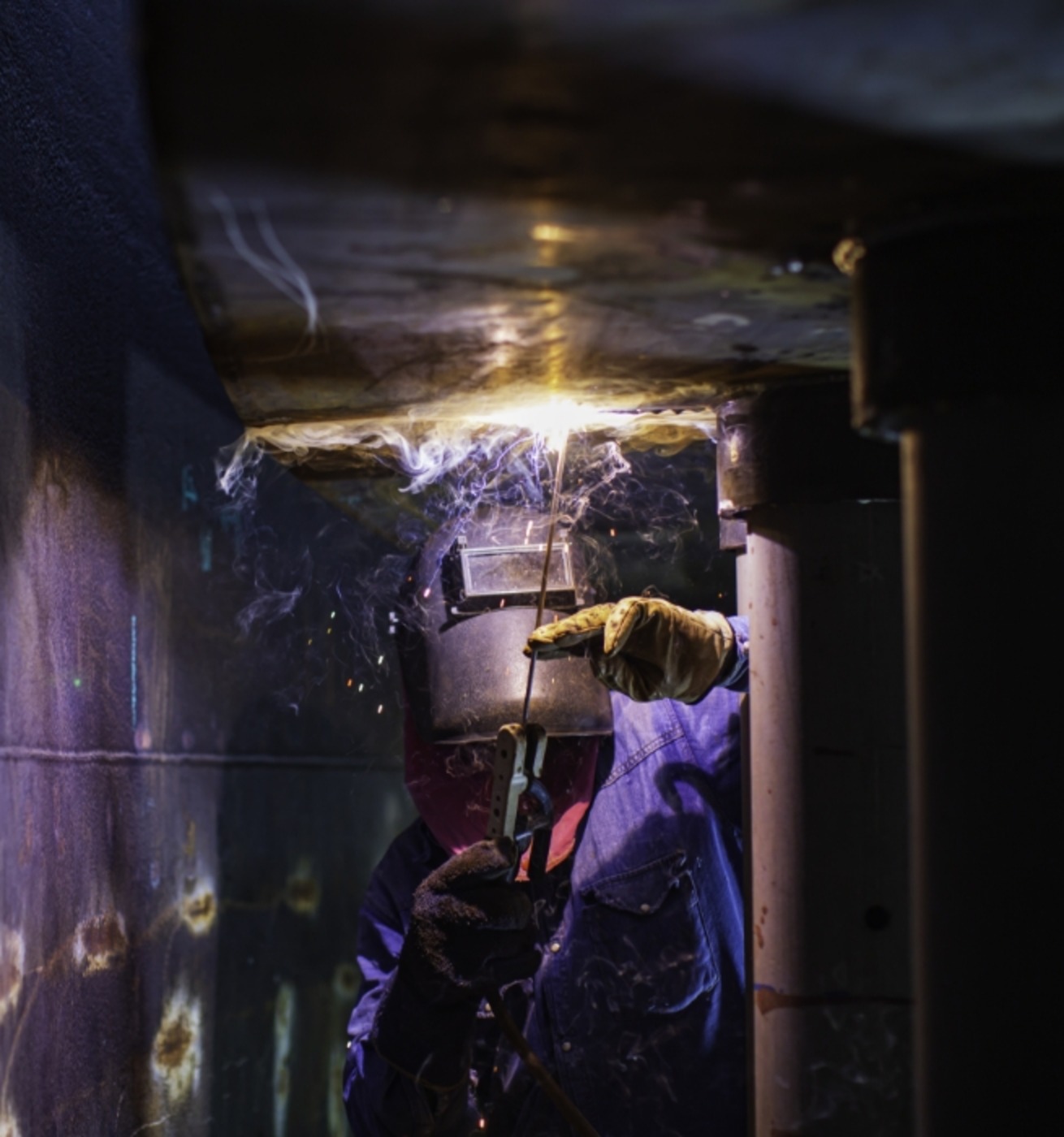
Le saviez-vous?
Saviez-vous qu’une personne qui effectue des opérations de sauvetage dans des espaces clos doit être formée au moins une fois par an?
Résumé
Les espaces clos présentent des risques pour la santé et la sécurité, car ils ne sont généralement pas conçus pour être des zones de travail. Les dangers dans les espaces clos sont principalement associés à l’atmosphère, à l’entrée ou à la sortie restreinte et aux tâches effectuées à l’intérieur. De nombreuses personnes sont blessées et tuées chaque année en travaillant dans des espaces clos en raison d’un manque d’oxygène et de la présence de gaz toxiques, ou en tentant un sauvetage. Les employeurs doivent déterminer les espaces clos sur le lieu de travail et prendre les mesures de contrôle nécessaires pour réduire les risques.
Qu’est-ce qu’un espace clos? [N.S. Reg. 44/99, s. 129(1)]
Les critères ci-dessous doivent être réunis pour qu’un espace entièrement ou partiellement clos soit considéré comme un espace clos :
- L’espace n’est pas conçu ou destiné à l’occupation humaine habituelle.
- L’accès ou l’issue est restreint.
- L’espace est ou peut devenir dangereux pour une personne qui y pénètre en raison de sa conception, de sa construction, de son emplacement, de l’atmosphère ou des matériaux ou substances qu’il contient, ou d’autres circonstances.
Les espaces clos se trouvent généralement dans des réservoirs, des cuves, des fosses, des bacs de stockage, des égouts souterrains, des doubles coques, des puisards, des voûtes, des conteneurs, des appareils à pression, des silos, des cheminées, des puits secs ou humides, des conduits, des tranchées, des pipelines, des réservoirs d’eau ou d’autres structures similaires fermées ou partiellement fermées.
Les risques éventuels pour la santé et la sécurité dans l’espace clos peuvent être divisés en deux groupes : les risques physiques et les risques atmosphériques.
Risques physiques :
- Petit espace de travail
- Matériaux qui peuvent engloutir ou noyer la personne qui travaille (liquides et solides à écoulement libre)
- Équipement rotatif ou en mouvement
- Bruit et vibrations
- Canalisations électriques et équipements sous tension
- Températures extrêmes
Risques atmosphériques :
- Atmosphère insuffisante ou enrichie en oxygène
- Accumulation de poussières combustibles ou de vapeurs explosives ou inflammables qui, en présence d’une source d’inflammation, peuvent exploser ou s’enflammer
- Gaz ou vapeurs toxiques
- Risques biologiques (p. ex. moisissures, excréments de souris)
L’employeur est tenu de faire ce qui suit avant que des travaux soient effectués dans un espace clos :
- S’assurer qu’une personne entrant dans l’espace clos dispose des renseignements nécessaires pour le désigner comme un espace clos. [N.S. Reg. 44/99, s.130(2)]
- Mettre en place une procédure écrite d’entrée dans un espace clos qui comprend : [N.S. Reg. 44/99, s.130(3)]
- une évaluation et un certificat écrit sur l’état de l’espace clos effectués par une personne compétente; [N.S. Reg. 44/99, s.130(3)(a)(i) and (ii)]
- la formation requise par une personne qui entre dans un espace clos et par une personne qui entreprend des opérations de sauvetage; [N.S. Reg. 44/99, s.130(3)(b)]
- le processus de notification à la personne qui entre dans l’espace clos du type de travail précis qui peut être effectué dans l’espace clos; [N.S. Reg. 44/99, s.130(3)(c)]
- la méthode à suivre par une personne qui entre dans l’espace clos, qui en sort ou qui l’occupe; [N.S. Reg. 44/99, s.130(3)(d)]
- l’équipement de protection à utiliser par toute personne entrant dans l’espace clos et l’équipement d’urgence à utiliser par la personne chargée du sauvetage; [N.S. Reg. 44/99, s.130(3)(e) and (g)]
- les procédures d’urgence écrites à suivre en cas d’accident ou d’autres urgences dans ou près de l’espace clos, y compris :
- une procédure de sauvetage écrite,
- la détermination de la nécessité d’avoir plusieurs personnes à l’extérieur d’un espace clos pendant son occupation par une personne,
- l’évacuation immédiate lorsqu’une alarme est activée ou lorsqu’il y a un changement significatif, inattendu et potentiellement dangereux de la concentration, du niveau ou du pourcentage de la substance dans l’espace clos; [N.S. Reg. 44/99, s.130(3)(f)(i)-(iii)]
- une procédure écrite pour des tests réguliers et continus de la substance dangereuse ou de l’agent physique dans l’espace clos afin de s’assurer que ceux-ci se situent dans des limites sûres; [N.S. Reg. 44/99, s.130(3)(h)] and [N.S. Reg. 44/99, s.130(8)]
- un moyen de ventiler l’espace clos pour éliminer ou diluer toutes les substances dangereuses en suspension dans l’air de l’espace clos. [N.S. Reg. 44/99, s.130(3)(i)] and [N.S. Reg. 44/99, s.15]
- Désigner une personne compétente pour effectuer l’évaluation et pour vérifier en effectuant des tests indiquant que : [N.S. Reg. 44/99, s.130(8)]
- la concentration d’une substance chimique ou d’un mélange de substances chimiques ne dépasse pas sa valeur limite seuil aux termes de la partie 2 se rapportant à la santé au travail du règlement sur la santé et la sécurité en milieu de travail (Workplace Health and Safety Regulations) ou 50 % de sa limite explosive inférieure; [N.S. Reg. 52/2013, s.2.1] [N.S. Reg. 52/2013, s.2.3]
- le niveau de l’agent physique dans l’espace clos n’est pas dangereux;
- le taux d’oxygène dans l’atmosphère de l’espace clos est compris entre 19,5 % et 22,5 %;
- les niveaux de sécurité pour l’environnement de travail peuvent être maintenus pendant le travail à l’intérieur de l’espace;
- toute substance dans laquelle une personne est susceptible d’être engloutie ou piégée a été retirée et l’entrée de tout liquide ou solide à écoulement libre a été isolée par des moyens sûrs;
- tous les équipements, machines, outils et installations électriques ont été verrouillés;
- l’ouverture pour l’entrée et la sortie de l’espace clos est suffisante pour permettre à un membre du personnel utilisant un équipement de protection individuelle ou un équipement d’urgence de passer en toute sécurité.
- S’assurer que la personne compétente utilise les instruments appropriés et correctement étalonnés pour effectuer les tests à l’intérieur de l’espace et conserve un enregistrement écrit des tests fonctionnels et d’étalonnage. [N.S. Reg. 44/99, s.130(10)]
- S’assurer que la personne compétente qui teste les conditions de l’espace clos fournit un certificat ou un permis d’entrée par écrit des résultats des tests effectués, de l’assurance du maintien des conditions pendant l’occupation et du type de travail recommandé et interdit dans l’espace clos. [N.S. Reg. 44/99, s.131(1)]
- S’assurer que la certification n’est valable que pendant 24 heures après l’heure à laquelle les tests requis ont été effectués. [N.S. Reg. 44/99, s.131(2)]
- Afficher une copie de la certification en cours de validité à l’entrée de l’espace clos pendant toute la durée d’occupation de l’espace clos et en conserver une copie pendant 12 mois. [N.S. Reg. 44/99, s.131(3) and (4)]
- Fournir l’équipement de protection et l’équipement d’urgence à chaque personne entrant dans l’espace et aux personnes effectuant les opérations de sauvetage. [N.S. Reg. 44/99, s.130(4)]
- S’assurer que les personnes qui entrent dans l’espace clos sont formées au moins une fois tous les deux ans et que la personne qui entreprend les opérations de sauvetage est formée au moins une fois par an. [N.S. Reg. 44/99, s.130(5)]
- Passer en revue la procédure d’entrée dans un espace clos au moins une fois par an et la mettre à jour si nécessaire. [N.S. Reg. 44/99, s.130(7)]
- Conserver l’évaluation et la procédure d’entrée dans l’espace clos sur le lieu d’activité à proximité de l’espace clos. [N.S. Reg. 44/99, s.130(11)]
- Mettre une copie de la procédure d’entrée dans un espace clos à la disposition de toutes les personnes concernées par l’entrée dans un espace clos. [N.S. Reg. 44/99, s.130(12)]
- Lorsque les concentrations et le pourcentage d’oxygène et de substances chimiques indiqués cidessus ne peuvent être respectés, purger l’espace clos et demander à la personne compétente de refaire les tests requis. [N.S. Reg. 44/99, s.132(a) and (b)]
- Ventiler l’espace clos pour éliminer les contaminants de l’air et ajuster les niveaux d’oxygène par ventilation mécanique. [N.S. Reg. 44/99, s.15(a) and (b)]
- S’assurer que les systèmes de ventilation sont conçus, installés, exploités, entretenus et réparés par une personne compétente. [N.S. Reg. 44/99, s.15(c)]
- Permettre aux membres du personnel de pénétrer ou de rester à l’intérieur d’un espace uniquement lorsque la concentration d’une substance chimique ou d’un mélange de substances chimiques ne dépasse pas 50 % de la limite inférieure d’explosivité. [N.S. Reg. 44/99, s.133(1)]
- Permettre aux membres du personnel de ne faire que le nettoyage ou l’inspection de l’espace, et utiliser un éclairage antidéflagrant, lorsque la concentration d’un environnement inflammable ou explosif se situe entre 10 et 50 % de sa limite inférieure d’explosivité. [N.S. Reg. 44/99, s.133(2)]
- S’assurer que l’espace clos ne contient pas de matières inflammables et combustibles ou de matières dangereusement réactives, lorsque le niveau d’oxygène à l’intérieur de l’espace est supérieur à 22,5 % et qu’une personne doit y travailler. [N.S. Reg. 44/99, s.133(3)]
- Demander à une personne compétente d’effectuer les tests appropriés afin de vérifier que l’atmosphère est confirmée inerte et s’assurer qu’une personne porte un équipement de protection approprié lorsqu’elle doit travailler dans un environnement dangereux à l’intérieur de l’espace. [N.S. Reg. 44/99, s.133(4)(a)(b)]
- S’assurer que tout l’équipement de protection et l’équipement d’urgence désignés ci-dessus, de même que l’équipement de sauvetage adéquat, sont fournis à l’entrée de l’espace clos. [N.S. Reg. 44/99, s.134(1)]
- Fournir à la personne qui occupe l’espace clos et entre dans celui-ci un harnais complet conforme à la dernière version de la norme de l’Association canadienne de normalisation (CSA) 259.10 relative au harnais complet, et s’assurer que la ligne de sécurité est fixée à un point d’ancrage et contrôlée par une personne compétente.[N.S. Reg. 44/99, s.134(3) and (4)]
- Fournir à une personne un équipement respiratoire approprié lorsque l’environnement à l’intérieur de l’espace est dangereux et un équipement de protection respiratoire à pression positive lorsque la concentration d’oxygène est inférieure à 19,5 %. [N.S. Reg. 44/99, s.135(1)(a) and (b)] [N.S. Reg. 44/99, s.13(1)]
- S’assurer que l’air comprimé utilisé dans un appareil respiratoire est conforme ou supérieur à la dernière version de la norme CSA CAN3Z180.1, « Air comprimé respirable et systèmes connexes ». [N.S. Reg. 44/99, s.13(2)]
- S’assurer que la sélection, l’utilisation, l’entretien, la mise à l’essai d’un appareil respiratoire et la formation des personnes qui utilisent un appareil respiratoire sont conformes à la dernière version de la norme CSA Z94.4, « Choix, utilisation et entretien des appareils de protection respiratoire ». [N.S. Reg. 44/99, s.13(3)]
- Lorsqu’il existe un risque de choc électrique, que l’équipement électrique pris en charge fonctionne sur batterie, qu’il est doublement isolé ou relié à la terre ou qu’il est équipé d’un disjoncteur de fuite de terre mis à l’essai, comme l’exige la dernière version de la norme CSA C22.1, « Code canadien de l’électricité, Première partie, Norme de sécurité relative aux installations électriques ».
Pendant que le travail dans l’espace clos se déroule, l’employeur doit faire ce qui suit :
- S’assurer qu’une personne compétente : [N.S. Reg. 44/99, s.134(2)(a) to (e)]
- est en poste près de l’espace clos;
- dispose d’un moyen de communication adéquat avec une personne à l’intérieur de l’espace clos;
- est dotée d’un moyen d’activer la procédure de sauvetage en cas d’urgence;
- reçoit une formation adéquate sur la procédure d’intervention d’urgence;
- tient un dossier des personnes qui se trouvent dans l’espace clos.
- S’assurer que des panneaux d’avertissement et barricades adéquats sont installés ou érigés, lorsqu’il y a un danger de toute forme de circulation. [N.S. Reg. 44/99, s.137]
Le membre du personnel doit faire ce qui suit :
- N’entrer dans un espace clos ou ne travailler à l’intérieur d’un espace clos qu’après qu’une personne compétente nommée par l’employeur a certifié que l’environnement n’est pas dangereux et que les contrôles appropriés ont été effectués. [N.S. Reg. 44/99, s.133(1) and (4)]
- Suivre les procédures écrites et utiliser l’équipement de protection et l’équipement d’urgence au besoin, s’il entre dans un espace clos, en sort ou s’il l’occupe. [N.S. Reg. 44/99, s. 130(6)]
- Ne pas pénétrer dans un espace clos sans formation applicable, comme il est indiqué dans la procédure de travail sécuritaire dans un espace clos.
- Ne pas pénétrer dans un espace clos s’il y a un nouveau danger qui n’a pas été déterminé lors de l’évaluation initiale des dangers.
- Demeurer vigilant en tout temps lorsqu’il travaille dans l’espace clos.
- Être conscient de tous les dangers potentiels et de tout symptôme ou signe d’avertissement d’exposition.
- Utiliser les méthodes de communication établies par l’employeur pour informer immédiatement la personne en poste de tout changement, tout en travaillant à l’intérieur de l’espace.
- Sortir immédiatement de l’espace clos si les conditions le justifient, si une alarme retentit ou si on lui demande de le faire.
- Au besoin, porter un harnais complet fixé à une ligne de sécurité. [N.S. Reg. 44/99, s.134(b)]
- Au besoin, utiliser l’équipement de protection respiratoire approprié. [N.S. Reg. 44/99, s.135(1)]
- Ne pas obstruer l’accès ou l’issue d’un espace clos en entreposant des matériaux à proximité ou près de l’accès ou de l’issue.
La personne en poste doit faire ce qui suit : [N.S. Reg. 44/99, s.134(2)]
- Faire preuve de vigilance en tout temps à l’extérieur et près de l’entrée.
- Surveiller la sécurité de la personne qui entre dans l’espace clos.
- Contrôler et surveiller la ligne de sécurité de la personne qui entre dans l’espace clos.
- Fournir de l’aide à la personne qui entre dans l’espace clos.
- Maintenir une communication bidirectionnelle continue avec la personne qui entre dans l’espace clos.
- Amorcer une intervention d’urgence au besoin. Effectuer un sauvetage d’urgence sans entrée dans l’espace clos, si cela est sécuritaire.
Législation
Occupational Safety General Regulations
N.S. Reg. 44/99
Part 1 Title and Definitions
Section 2 Definitions
2. In these regulations,
(a) "Act" means the Occupational Health and Safety Act ;
(aa) "adequate" means sufficient to protect a person from injury or damage to health;
(b) "ALI" means the Automotive Lift Institute;
(ba) "angle of repose" means the angle with the horizontal at which material will no longer flow freely;
(c) "ANSI" means the American National Standards Institute;
(ca) "approved" means approved by the Department or by an agency or authority designated or selected by the Department to make approvals;
(d) "ASME" means the American Society of Mechanical Engineers;
(e) "ASTM" means the American Society for Testing and Materials;
(ea) "CGA" means the Compressed Gas Association;
(f) "CGSB" means the Canadian General Standards Board;
(g) "competent person" means a person who is
(i) qualified because of their knowledge, training and experience to do the assigned work in a manner that ensures the health and safety of every person in the workplace, and
(ii) knowledgeable about the provisions of the Act and regulations that apply to the assigned work, and about potential or actual danger to health or safety associated with the assigned work;
(ga) "compressed air" means air mechanically raised to a pressure higher than atmospheric pressure;
(h) "CSA" means the Canadian Standards Association;
(i) "demolition" means the destruction or removal of all, or part, of an existing building or structure;
(ia) "Department" means the Department of Labour and Advanced Education;
(j) "designated" means, in relation to an employer, appointed in writing by the employer;
(k) "electrical installation" means the wires, machinery, apparatus, appliances, devices, material and equipment used or intended for use for the generation, transmission, distribution, supply and use of electrical power or energy, and includes a power line and power line equipment;
(l) "engineer" means a person who is registered as a member or licensed to practise under the Engineering Profession Act and is competent to do the work being performed;
(m) "firefighter" means
(i) an employee who provides fire suppression services to the public from a fire department within a municipality or local service district, or
(ii) an industrial firefighter;
(n) "guardrail" means a fall protection system consisting of vertical and horizontal members that
(i) are capable of withstanding concentrated forces, as prescribed in these regulations or an applicable standard,
(ii) warn of a fall hazard, and
(iii) reduce the risk of a fall;
(o) "hazardous substance" means chemical or biological material, dangerous goods within the meaning of the Dangerous Goods Transportation Act or a controlled product within the meaning of the Hazardous Products Act (Canada) that is likely to, because of its harmful nature, cause injury or damage to the health or safety of a person exposed to it;
(p) "hoist" means a device or equipment and its structure used for lifting or lowering material, including cranes, an automotive lift, a winch, a chain fall or other similar device, but does not include a lift truck, a power operated elevating work platform, a device to which the Elevators and Lifts Act applies or a hoist that operates in a shaft in the underground at a mine;
(pa) "ITSDF" means the Industrial Truck Standards Development Foundation;
(q) "industrial firefighter" means an employee who
(i) is designated to fight fires at the employee's place of employment, and
(ii) is employed by an employer who does not, in the normal course of its business, provide fire suppression services to the public;
(qa) "latest version" means, in relation to a standard or other publication, the latest edition of the standard or publication as supplemented, amended, added to, replaced or superseded;
(r) "lift truck" means a lift truck as defined in the latest version of ANSI standard ANSI/ITSDF B56.1, "Safety Standard for Low Lift and High Lift Trucks";
(s) "locked out" means to have
(i) isolated the energy source or sources from a machine, equipment, tool or electrical installation,
(ii) dissipated any residual energy in a system, and
(iii) secured the isolation of the energy source or sources by an inhibiting device that is operated by a key or other process,
and to have performed a "lock-out" has a similar meaning;
(t) "machine" Repealed. [N.S. Reg. 52/2000, s. 1]
(u) "manufacturer's specifications" means
(i) the written instructions of a manufacturer of a machine, material, tool or equipment that outline the manner in which the machine, material, tool or equipment is to be erected, installed, assembled, started, operated, used, handled, stored, stopped, adjusted, carried, maintained, repaired, inspected, serviced, tested, cleaned or dismantled, and
(ii) a manufacturer's instruction, operating or maintenance manual and drawings respecting a machine, tool or equipment;
(ua) "mobile crane" means a mobile crane to which the latest version of CSA standard CSA Z150 , "Safety Code on Mobile Cranes" applies;
(v) "NFPA" means the National Fire Protection Association;
(va) "overhead crane" means any mechanical device or structure that is used to raise, lower and move material that travels overhead and that incorporates a
(i) power driven drum, bridge and cable or rope,
(ii) single or multiple girder, and
(iii) moveable bridge carrying a moveable or fixed hoisting mechanism,
but does not include wall cranes, cantilever gantry cranes and semi-gantry cranes;
(vb) "personal flotation device" means personal protective equipment that is capable of supporting a person with their head above water without the direct effort of the person wearing the equipment;
(w) "power line" means the above-ground or underground wiring that is used to distribute electricity;
(x) "power line equipment" means the components that are required to distribute electricity by means of a power line;
(y) "power operated elevating work platform" means a mobile horizontal working surface that provides access and support to a person at a workplace, and that is elevated and lowered by means of a mechanism and [that complies with] Part 23: Scaffolds and Other Elevated Work Platforms, of the Workplace Health and Safety Regulations made under the Act, including a standard listed in subsection (4) thereof;
(z) "powered mobile equipment" means self-propelled equipment that is designed to operate on land in conditions other than a public highway, but does not include equipment primarily designed to transport persons, a lift truck or a power operated elevating work platform;
(aa) "SAE" means the Society of Automotive Engineers;
(ab) "structural fire-fighting" means the activities of rescue, fire suppression and conservation of property from fires involving buildings, structures, vehicles, vessels, aircraft or other large objects constructed by human effort;
(ac) "surface mine" means a work or undertaking, other than a trench, for the purpose of opening up, proving, removing or extracting any metallic or non-metallic mineral or mineral bearing substance, rock, earth, clay, sand or gravel by means of an open excavation, and includes a pit or quarry;
(ad) "tower crane" means any mechanical device or structure that
(i) incorporates a power-driven drum and cable or rope and a vertical mast or tower and a jib,
(ii) is of the traveling, fixed or climbing type, and
(iii) is used exclusively for raising, lowering and moving material;
(ae)"trench" means an excavation in which the excavation depth exceeds the excavation width;
(af) "work area" means a location at the workplace at which an employee or self-employed person is or is likely to be working;
(ag) "worked" means drilled, blasted, extracted, excavated, loaded or subjected to other similar work.
[N.S. Reg. 52/2000, s. 1; 151/2003; 53/2013, ss. 1, 93]
Part 3 Personal Protective Equipment
Section 13 Respiratory hazard
13. (1) Where a person is exposed to a respiratory hazard that may cause injury or disease, an employer shall provide and ensure the use of an adequate respirator that is appropriate to the hazard.
(2) An employer shall ensure that the compressed breathing air used in a respirator complies with or exceeds the latest version of CSA standard Z180.1 , "Compressed Breathing Air and Systems".
(3) An employer shall ensure compliance with the latest version of CSA standard CSA Z94.4 , "Selection, Use, and Care of Respirators", in respect of
(a) the selection, use, maintenance and testing of a respirator; and
(b) the training of users of a respirator.
(4) Repealed. [N.S. Reg. 53/2013, s. 11]
[N.S. Reg. 52/2000, s. 7; 53/2013, s. 11]
Part 4 Ventilation, Lighting, Sanitation and Accommodation
Section 15 Ventilation
15. An employer shall
(a) provide for a supply of fresh air into, and the removal of air from, a workplace or part thereof that is, so far as is reasonably practicable, sufficient to
(i) keep the air reasonably pure, and
(ii) render harmless all gases, vapours, dust or other impurities that are likely to endanger the health or safety of any person therein;
(b) where a process is carried on that produces a gas, vapour, dust or other impurity that is likely to be inhaled to an injurious extent by a person in the workplace, provide and use such mechanical means as are capable of
(i) preventing such inhalation so far as is reasonably practicable,
(ii) effectively carrying off and disposing of the impurity, and
(iii) preventing the recirculation and re-entry into the workplace of air containing the impurity; and
(c) ensure that all ventilation systems used for controlling the dissemination of gases, vapours, dust or other impurities, including their collection systems and emptying processes, are designed, installed, operated, maintained and repaired in an adequate manner by a competent person.
[N.S. Reg. 52/2000, s. 8]
Part 12 Confined Space Entry
Section 129 Application and interpretation
129. (1) In this Part, "confined space" means an enclosed or partially enclosed space
(a) not designed or intended for regular human occupancy;
(b) with restricted access or exit; and
(c) that is or may become hazardous to a person entering it because of its design, construction, location, atmosphere or the materials or substances in it or other conditions.
(1A) When assessing whether a space is or may become hazardous to a person entering it because of its atmosphere under clause (1)(c), a person must not take into account the protection afforded to a person through the use of personal protective equipment or ventilation.
(2) Sections 130 to 137 do not apply to
(a) a development heading in an underground mine; and
(b) a firefighter engaged in structural fire-fighting or rescue, if the firefighter has received adequate training for confined space entry and rescue.
[N.S. Reg. 52/2000, s. 66; 53/2013, s. 53]
Section 130 Assessment and written procedures
130. (1) An employer shall ensure that no person enters a confined space until the employer has fulfilled the requirements of this Section and a competent person has provided a written certificate, in accordance with Section 131.
(2) Where a workplace includes a confined space, the employer shall ensure that a person who may be required to enter the confined space has the information necessary to identify it as such.
(3) Where at least one confined space has been identified, an employer shall establish a written confined space entry procedure that includes provision
(a) that prior to the entry of a person into the confined space, an assessment of the confined space is
(i) done in accordance with subsection (8), and
(ii) recorded by the person conducting the assessment in accordance with Section 131;
(b) for the training required by a person who may enter a confined space in the course of the person's work, and for the training required by a person who may undertake rescue operations with regard to a confined space, including training on
(i) proper use of personal protective equipment,
(ii) written rescue procedures,
(iii) maintaining contact between a person in the confined space and an attendant required under clause 134(2)(a) and the means by which the written rescue procedure is initiated in the event of an emergency in the confined space,
(iv) the limitations on the type of work that can be performed in the confined space, and
(v) the means of identifying a hazard while in a confined space;
(c) for the process for notifying a person entering a confined space of the specific type of work that may be performed in the confined space;
(d) for the method to be followed by a person entering into, exiting from or occupying the confined space;
(e) for the protective equipment that is to be used by every person entering the confined space;
(f) for the written emergency procedures to be followed in the event of an accident or other emergency in or near the confined space, including
(i) immediate evacuation of the confined space when an alarm is activated or there is any significant, unexpected and potentially hazardous change in the concentration, level or percentage referred to in subsection (8),
(ii) a determination of whether more than one person is required to be present outside a confined space during the occupancy of any person, and
(iii) a written rescue procedure;
(g) for the protective equipment and emergency equipment to be used by a person who undertakes rescue operations in the event of an accident or other emergency;
(h) for a written procedure for testing the confined space in an adequate manner, at regular intervals and on a continuous basis, if necessary, to ensure the concentration or level of a hazardous substance or physical agent complies with the limits in subsection (8); and
(i) for a means of ventilating the confined space to ensure the removal or dilution of all airborne hazardous substances from the confined space.
(4) An employer shall provide to each person entering the confined space and a person who may undertake rescue operations the protective equipment and emergency equipment referred to in this Section.
(5) An employer shall ensure that
(a) a person who enters a confined space is trained at least once every 2 years in accordance with the procedures set out in clause (3)(b); and
(b) a person who undertakes rescue operations is trained at least once every year in accordance with the procedures set out in clause (3)(b).
(6) Every person who enters into, exits from or occupies the confined space shall follow the written procedures and use the protective equipment and emergency equipment as required.
(7) An employer shall review the confined space entry procedure at least once a year and amend it, if necessary.
(8) An employer shall designate a competent person who shall perform the assessment required in clause (3)(a), which shall include
(a) where the level of a chemical substance or a mixture of chemical substances may constitute a hazard, tests to ensure that the concentration of a chemical substance or a mixture of chemical substances in the confined space does not exceed its occupational exposure limit under Part 2: Occupational Health, of the Workplace Health and Safety Regulations made under the Act or 50% of its lower explosive limit;
(b) where the level of a physical agent may constitute a hazard, tests to ensure that the level of the physical agent in the confined space is not hazardous;
(c) tests to ensure that the level of oxygen in the atmosphere in the confined space is not less than 19.5 % and not more than 22.5 %, unless the employer can demonstrate that an unsafe oxygen level is not a possibility in the circumstance;
(d) a determination of whether the concentrations, levels or percentages referred to in clauses (a), (b) and (c) can be maintained during the period of proposed occupancy of the confined space;
(e) a confirmation that any liquid in which the person may drown or any free flowing solid in which a person may become entrapped has been removed from the confined space or that work practices have been established that specifically address the presence of the liquid or solid;
(f) a confirmation that entry of any liquid, free flowing solid or hazardous substance into the confined space that could endanger the health or safety of a person has been prevented by a secure means of disconnection, the fitting of blank flanges or the implementation of a double block and bleed written procedure established by the employer or similar positive actions;
(g) confirmation that a machine, equipment, tool or electrical installation that presents a hazard to a person entering into, exiting from or occupying the confined space has been locked out; and
(h) confirmation that the opening for entry into and exit from the confined space is sufficient to allow safe passage of a person who is using personal protective equipment or emergency equipment.
(9) Where there is no possibility that a hazard identified in clauses (8)(a), (b) and (c) may occur, the requirements of clause (3)(h) do not apply.
(10) The competent person referred to in subsection (8) shall, when performing the tests required under clauses (8)(a), (b) and (c), use appropriate and properly calibrated instruments that have been functionally tested and maintain a written record of the functional and calibration tests.
(11) An employer shall keep the assessment and the confined space entry procedure required under subsection (3) at the place of business of the employer nearest to the workplace at which the confined space is located.
(12) An employer shall make available a copy of the confined space entry procedure to all persons involved in the entry of a confined space.
[N.S. Reg. 52/2000, s. 67; 53/2013, s. 54]
Section 131 Certification of confined space conditions
131. (1) Subsequent to performing the tests required in clauses 130(8)(a), (b) and (c), a competent person shall certify, in writing, that the conditions tested in the confined space are likely to be maintained within a predicted and recorded range for the entire time the certification is valid, and the certification shall include
(a) the signature of the competent person;
(b) the date and time of when the tests were performed;
(c) the type of work that
(i) can be performed in the confined space, and
(ii) is explicitly banned in the confined space;
(d) the means by which the work is to be performed;
(e) the expiry date and time of the certification; and
(f) a record of the tests performed and of the test results.
(2) No certification issued under subsection. (1) shall be valid for longer than 24 hours after the time the tests required by clauses 130(8)(a), (b) and (c) were performed.
(3) An employer shall post a copy of the currently valid certification required in subsection. (1) at the entrance to the confined space for the duration of the confined space occupancy.
(4) An employer shall maintain a copy of the certification required in subsection. (1) for 12 months.
[N.S. Reg. 53/2013, ss. 55, 93]
Section 132 Purging and further testing
132. Where the tests required in clauses 130(8) (a), (b) and (c) indicate that the concentration level or percentage referred to in those clauses cannot be complied with, an employer shall
(a) ensure that, where reasonably practicable, the confined space is purged until concentrations are below the hazards referred to in clauses 130(8)(a) to (d); and
(b) after the purging, ensure that the tests required under subsection 130(8) are conducted again.
[N.S. Reg. 53/2013, s. 56]
Section 133 Response to hazardous condition
133. (1) An employer shall ensure that no person enters or remains in a confined space where the tests conducted under clause 130(8)(a) indicate that a concentration of a chemical substance or mixture of chemical substances in the confined space equals or exceeds 50% of the lower explosive limit of the chemical substance or mixture of chemical substances.
(2) Where the concentration of a chemical substance or mixture of chemical substances may cause a flammable or explosive hazard, and where the tests conducted under clause 130(8)(a) indicate that the concentration of the substance or substances in a confined space is between 10% and 50% of the lower explosive limit, an employer shall
(a) provide explosion-proof lighting and ensure that it is used where necessary; and
(b) ensure that the only work performed in the confined space is cleaning or inspecting and is of such a nature that it does not create any source of ignition.
(3) Where the level of oxygen in a confined space is more than 22.5% and a person is to work in the confined space, an employer shall ensure that the confined space does not contain any substance which would be classified as flammable and combustible material or as dangerously reactive material under the Controlled Products Regulations made under the Hazardous Products Act (Canada).
(4) Despite subsection. (1), where the tests conducted under clause 130(8)(a) indicate that the concentration of a chemical substance or mixture of chemical substances in the confined space exceeds, or is likely to exceed, 50% of the lower explosive limit, measured at atmospheric conditions containing 20.9% oxygen, of the chemical substance or mixture of chemical substances and cannot be lowered below that prescribed threshold level, a person may enter the confined space if the employer ensures that
(a) the atmosphere is confirmed inert by a competent person after the performance of appropriate tests; and
(b) the person is using appropriate protective equipment when working in the confined space.
[N.S. Reg. 52/2000, s. 68]
Section 134 Protective equipment and security measures
134. (1) An employer must ensure that all of the following is provided as close as reasonably practicable to the entrance to the confined space before a person enters the confined space:
(a) all protective equipment and emergency equipment identified under subsection 130(3); and
(b) adequate rescue equipment including a yoke and adequate means to lift an unconscious person.
(2) Where a person enters a confined space, an employer shall ensure that a competent person
(a) is in attendance in the immediate vicinity of the confined space;
(b) has a means of adequate communication with a person inside the confined space;
(c) is provided with a means of activating the rescue procedure in an emergency;
(d) is adequately trained in the emergency response procedure; and
(e) maintains a record of who is in the confined space.
(3) An employer shall
(a) where reasonably practicable, provide a person entering into and occupying a confined space with a full body harness;
(b) ensure that a full body harness provided under clause (a) is worn; and
(c) where it does not present a hazard, ensure that an attached life line is
(i) securely fastened to an anchor point, and
(ii) controlled by the competent person referred to in subsection (2).
(4) An employer shall ensure that the full body harness referred to in subsection (3) complies with the requirements for Group E harnesses in the latest version of CSA standard CSA 259.10 , "Full Body Harnesses".
[N.S. Reg. 52/2000, s. 69; 53/2013, ss. 57, 93]
Section 135 Respiratory protective equipment
135. (1) An employer shall provide
(a) appropriate respiratory protective equipment to a person who enters a confined space where the concentration of a chemical substance or a mixture of chemical substances in a confined space is hazardous to the health or safety of a person; and
(b) positive pressure respiratory protective equipment to a person who enters a confined space where the concentration of oxygen is less than 19.5 %.
(2) An employer shall ensure that the respiratory protective equipment referred to in clause (1)(b).
(a) has an air line and an independent 5-minute supply of air; or
(b) is self-contained and equipped with an audible alarm that sounds when the air supply has diminished to
(i) 20% of the capacity of the unit, or
(ii) a 5-minute reserve.
[N.S. Reg. 52/2000, s. 70]
Section 137
137. An employer shall ensure that adequate warning signs and barricades are installed or erected to protect a person working as part of a confined space entry, if a hazard from any form of traffic exists.
Workplace Health and Safety Regulations
N.S. Reg. 52/2013
Part 2 OCCUPATIONAL HEALTH
Section 2.1 Definitions for Part 2
2.1 In this Part,
"physical agent", in relation to threshold limit values for occupational exposure, means an agent of acoustic, electromagnetic, ergonomic, mechanical or thermal nature;
"threshold limit values" means the threshold limit values established by the TLVs and BEIs that represent
(i) for chemical substances, the airborne concentrations of chemical substances and conditions under which it is believed that nearly all healthy workers may be repeatedly exposed, day after day, over a working lifetime, without adverse health effects,
(ii) for physical agents, the levels of exposure and conditions under which it is believed that nearly all healthy workers may be repeatedly exposed, day after day, without adverse health effects,
"TLVs and BEIs" means the latest version of the publication of the American Conference of Governmental Industrial Hygienists of threshold limit values and biological exposure indices.
Section 2.3 Threshold limit values
2.3 An employer must comply with, and ensure compliance with, the threshold limit values for exposure to all of the following, as listed in the TLVs and BEIs:
(a) gases;
(b) vapours;
(c) mists;
(d) fumes;
(e) smoke;
(f) dust;
(g) chemical substances;
(h) physical agents.